Phelps County Dog Registration Information
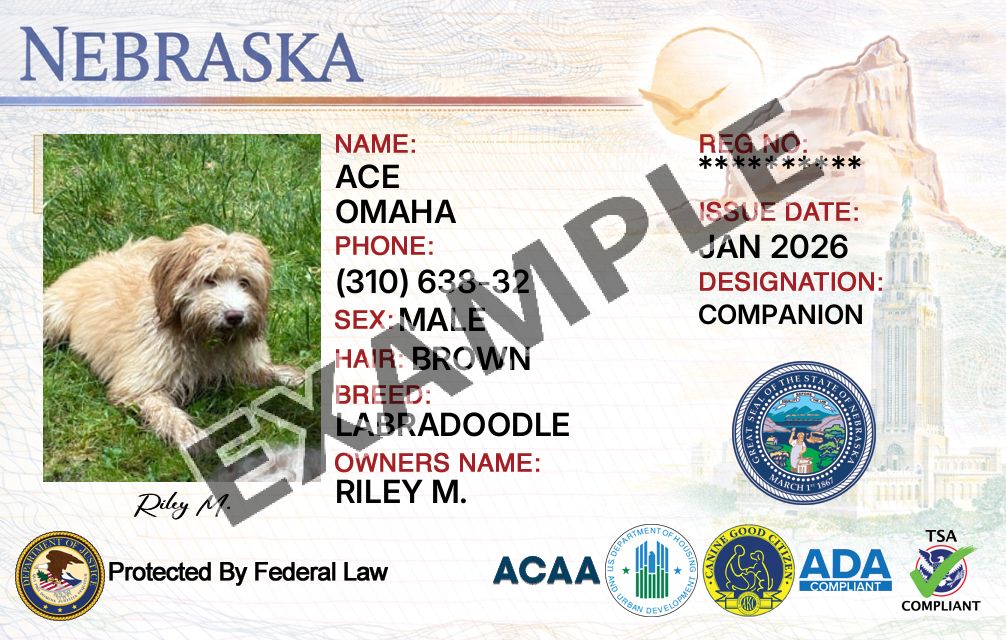
Service Dogs and Emotional Support Animals in Phelps, Nebraska
If you’re asking “where do I register my dog in Phelps County, Nebraska for my service dog or emotional support dog,” the key thing to know is that dog licensing is handled locally (often by your city office if you live inside city limits), while service dogs and emotional support animals (ESAs) are not “registered” through one universal federal registry. In practice, most residents are looking for two separate things: (1) a local dog license/tag and (2) understanding legal status for a service dog or ESA.
Below is locally focused information for Phelps County, Nebraska, including the most relevant official offices to contact first. If you live within a city or village in Phelps County (for example, Holdrege), your municipality may have its own animal control dog license process and deadlines.
Where to Register or License Your Dog in Phelps County, Nebraska
Start with the office that matches where you live. If your address is inside Holdrege city limits, the City Office is the primary place referenced for dog tags/licenses. If you are outside city limits or unsure which authority applies, call the relevant local office first and confirm whether licensing is handled by your municipality, by the county, or through another local arrangement.
City of Holdrege — City Hall / City Office (Dog Tags / City Dog License)
Phelps County Sheriff’s Office (Animal-related enforcement questions; unincorporated area guidance)
Phelps County Courthouse — County Clerk (General county office contact; routing and confirmation)
Overview of Dog Licensing in Phelps County, Nebraska
How licensing usually works locally
Dog licensing requirements are commonly set and enforced at the municipal level (city or village ordinances), not by one single countywide “pet registry.” That means the answer to “where to register a dog in Phelps County, Nebraska” can change based on whether you live:
- Inside city limits (example: Holdrege) where the city issues dog tags/licenses.
- In an unincorporated area of Phelps County (outside any city/village limits), where rules can differ and you may need to confirm the responsible authority.
What a dog license typically is (and what it is not)
A local dog license (often a tag) is typically:
- Proof that the dog meets local requirements (commonly including current rabies vaccination).
- A way for animal control or law enforcement to identify an owned dog if it’s found loose.
- A local compliance item that may have annual renewal dates and fees.
A dog license is not the same thing as service dog status, and it is not the same thing as an emotional support animal designation.
What You Need Before Registering a Dog
Common documents and information
While exact dog licensing requirements in Phelps County, Nebraska can vary by municipality, most local offices ask for a combination of the following:
- Rabies vaccination proof (current certificate from a veterinarian).
- Your contact information (name, address, phone).
- Description of the dog (breed, color/markings, age).
- Spay/neuter documentation (if applicable) because fees often differ by altered vs. unaltered dogs.
- Payment for licensing fees (amount and accepted payment methods can vary).
Rabies vaccination is a frequent requirement
Many Nebraska municipalities require proof of rabies vaccination as part of the dog license process. Even if your dog is a service dog or emotional support dog, local licensing and public health rules (like rabies vaccination requirements) may still apply.
Steps to Register or License a Dog in Phelps County, Nebraska
Step 1: Confirm which local authority applies to your address
Start by confirming whether your home is inside a city/village boundary:
- If you live in Holdrege city limits, contact the City of Holdrege City Office for dog tags/licensing.
- If you live outside city limits (unincorporated Phelps County) or are unsure, call an official office (often the Phelps County Sheriff’s Office or the County Clerk) to confirm the correct licensing authority for your location.
Step 2: Gather proof of rabies vaccination and other required details
Have your rabies certificate ready. If your municipality has different fees for spayed/neutered dogs, bring documentation so you receive the correct rate.
Step 3: Apply in person during office hours (or ask if other options exist)
Many city offices handle dog license tags at the counter during normal business hours. If you need special accommodations or have questions about requirements for a service dog or emotional support animal, ask the office what they require for licensing and what they do (and do not) “register.”
Step 4: Keep the tag information current
If you move, transfer ownership, or your dog’s vaccination status changes, update your local licensing office so your dog can be identified quickly if lost.
Service Dog Laws in Phelps County, Nebraska
No universal federal “service dog registration”
Service dogs are generally recognized based on what they are trained to do for a person with a disability, not because they appear in a centralized national registry. If someone offers to “officially register” your service dog in a single nationwide government database, that is not how service dog legitimacy is typically established under disability law.
Local dog licensing vs. service dog status
It helps to separate two concepts:
- Dog license in Phelps County, Nebraska: Local, administrative compliance (often rabies-related) handled by your municipality or local authority.
- Service dog status: A legal status tied to disability accommodations and a dog trained to perform tasks related to a disability.
What local offices usually need for licensing a service dog
In many places, a service dog is still a dog for public health purposes, so you should expect to provide standard licensing items (especially rabies vaccination proof). If your municipality has a special category or fee rule for service animals, ask the licensing office directly what documentation they accept.
Comparison: Dog License vs. Service Dog vs. Emotional Support Animal
| Category | What it is | Typical purpose | What you usually need | Where it’s handled |
|---|---|---|---|---|
| Dog License | Local license/tag for a dog (often renewed periodically). | Public health compliance and identification (found dog return, ordinance compliance). | Commonly rabies vaccination proof; owner details; fee; sometimes spay/neuter proof. | Usually city/village office (e.g., city hall) or local authority depending on your address. |
| Service Dog | A dog trained to do specific work or tasks for a person with a disability. | Disability accommodation in public spaces and other covered contexts. | Training to perform tasks; not typically based on a universal registry. Local licensing rules may still apply. | Legal status under disability laws; licensing still handled locally like any other dog. |
| Emotional Support Animal (ESA) | An animal that provides comfort/support that may help with a disability-related need. | Commonly relevant to housing accommodations (rules differ from service dogs). | Generally supported by documentation for a housing accommodation; not a universal registry. Local dog licensing rules may still apply. | Usually addressed in housing processes; dog licensing handled locally by municipality/local authority. |
Emotional Support Animal Rules in Phelps County, Nebraska
ESAs are different from service dogs
An emotional support animal is not the same as a service dog. A service dog is trained for specific tasks related to a disability, while an ESA provides emotional support that may help with a disability-related need, most often discussed in the context of housing accommodations.
No single official ESA registration
Like service dogs, ESAs are not legitimized by a one-size-fits-all federal registry. If you need an ESA for housing-related purposes, you’ll generally be working within a housing accommodation process, while still following any local dog licensing requirements for Phelps County, Nebraska (or your specific city/village) for rabies and licensing.
How ESAs interact with local licensing
Even if your dog is an emotional support dog, you may still need to obtain a local dog license/tag where you live. The dog license is typically about vaccination verification, local compliance, and identification—separate from housing accommodation paperwork.
Frequently Asked Questions
Local note on municipalities within Phelps County
Phelps County includes multiple communities and rural areas. Dog licensing requirements in Phelps County, Nebraska may be different depending on your city or village ordinances. If you are not in Holdrege or you are close to city limits, confirm jurisdiction before you apply so you register in the right place.
What You May Need
Disclaimer
Local laws, fees, office locations, and contact details can change. Residents should verify the most current information with their local animal services or licensing office in Phelps County, Nebraska.
Register A Dog In Other Nebraska Counties
Select your county below to get started with your dog’s ID card. Requirements and license designs may vary by county, so choose your location to see the correct options and complete your pup’s registration.
- Adams County Dog Registration
- Antelope County Dog Registration
- Arthur County Dog Registration
- Banner County Dog Registration
- Blaine County Dog Registration
- Boone County Dog Registration
- Box Butte County Dog Registration
- Boyd County Dog Registration
- Brown County Dog Registration
- Buffalo County Dog Registration
- Burt County Dog Registration
- Butler County Dog Registration
- Cass County Dog Registration
- Cedar County Dog Registration
- Chase County Dog Registration
- Cherry County Dog Registration
- Cheyenne County Dog Registration
- Clay County Dog Registration
- Colfax County Dog Registration
- Cuming County Dog Registration
- Custer County Dog Registration
- Dakota County Dog Registration
- Dawes County Dog Registration
- Dawson County Dog Registration
- Deuel County Dog Registration
- Dixon County Dog Registration
- Dodge County Dog Registration
- Douglas County Dog Registration
- Dundy County Dog Registration
- Fillmore County Dog Registration
- Franklin County Dog Registration
- Frontier County Dog Registration
- Furnas County Dog Registration
- Gage County Dog Registration
- Garden County Dog Registration
- Garfield County Dog Registration
- Gosper County Dog Registration
- Grant County Dog Registration
- Greeley County Dog Registration
- Hall County Dog Registration
- Hamilton County Dog Registration
- Harlan County Dog Registration
- Hayes County Dog Registration
- Hitchcock County Dog Registration
- Holt County Dog Registration
- Hooker County Dog Registration
- Howard County Dog Registration
- Jefferson County Dog Registration
- Johnson County Dog Registration
- Kearney County Dog Registration
- Keith County Dog Registration
- Keya Paha County Dog Registration
- Kimball County Dog Registration
- Knox County Dog Registration
- Lancaster County Dog Registration
- Logan County Dog Registration
- Loup County Dog Registration
- Madison County Dog Registration
- McPherson County Dog Registration
- Merrick County Dog Registration
- Morrill County Dog Registration
- Nance County Dog Registration
- Nehama County Dog Registration
- Nuckolls County Dog Registration
- Otoe County Dog Registration
- Pawnee County Dog Registration
- Perkins County Dog Registration
- Pierce County Dog Registration
- Platte County Dog Registration
- Polk County Dog Registration
- Red Willow County Dog Registration
- Richardson County Dog Registration
- Rock County Dog Registration
- Saline County Dog Registration
- Sarpy County Dog Registration
- Saunders County Dog Registration
- Scotts Bluff County Dog Registration
- Seward County Dog Registration
- Sheridan County Dog Registration
- Sherman County Dog Registration
- Sioux County Dog Registration
- Stanton County Dog Registration
- Thayer County Dog Registration
- Thomas County Dog Registration
- Thurston County Dog Registration
- Valley County Dog Registration
- Washington County Dog Registration
- Wayne County Dog Registration
- Webster County Dog Registration
- Wheeler County Dog Registration
- York County Dog Registration